Managing fence-line emissions near homes: trust, uptime and the signed record
A practical workflow for triaging alerts, investigating causes and documenting the response.
09 July 2026 · 4 min read · Compliance

Trust is an uptime problem
Homes at the fence line do not experience your annual test. They experience the night the crusher ran, the wind that turned, and the hours nobody can later reconstruct. If the monitoring station was offline, the community has no reason to believe the apology. Uptime, calibration and a visible gap are how a plant stays credible when the reading is bad and when it is missing.
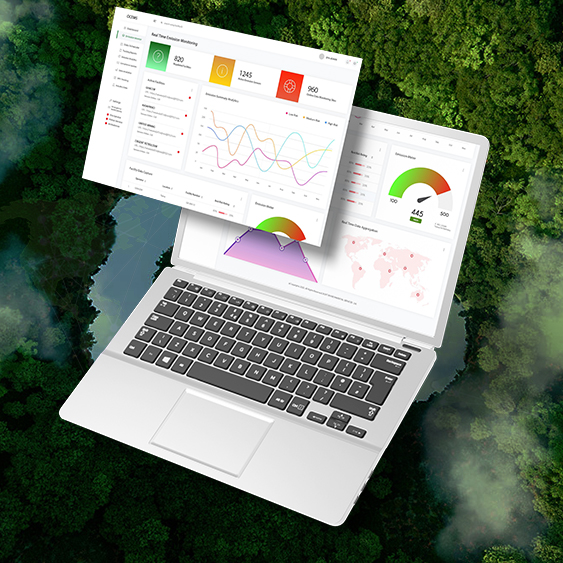
GOCEMS keeps ambient and boundary series in the same facility model as the stacks they sit beside. An exceedance alert carries the station, the averaging period and the limit. The signed record is the series operations already saw live.
Triage while the average is still forming
Exceedances should not wait for audit season. When a validated average crosses the configured threshold, the people who can change the plant need the alert with enough context to act: which source, which window, whether the instrument was in calibration, whether availability is already impaired.
A practical order: confirm the instrument is healthy, check the process (load, fuel, filter, flare), check the weather at the boundary, then document the response on the same record. The point is not a new workflow tool. It is that investigation notes attach to the hour the EPA will later be asked to believe.
One number for operations, EHS and the EPA
Fence-line programmes fail when the public number, the shift dashboard and the permit pack diverge. Someone sanitises a chart; someone else fills a gap; the community is shown a third figure. GOCEMS is built so those three audiences read one validated series. Community-facing reporting, when you need it, is not a parallel system.
Participation in GOCEMS is compulsory for industries operating in Ghana. Permit conditions under the Environmental Assessment Regulations keep monitoring inside the licence. Fence-line stations are how that condition is met for exposure, not only for what left the duct.
What a walkthrough should settle
Which boundary stations exist or should exist, which limits and averaging windows apply, who gets the alert at 02:00, and what the signed pack looks like when a community meeting asks for the hour. Write to the Accra team with the site and the instruments. The reply is a map of those points, not a brochure.
Further reading
Bring your own stacks, limits and reporting calendar.
A walkthrough maps your site onto GOCEMS: instruments, averaging periods, who gets the alert, and what the signed report looks like.